


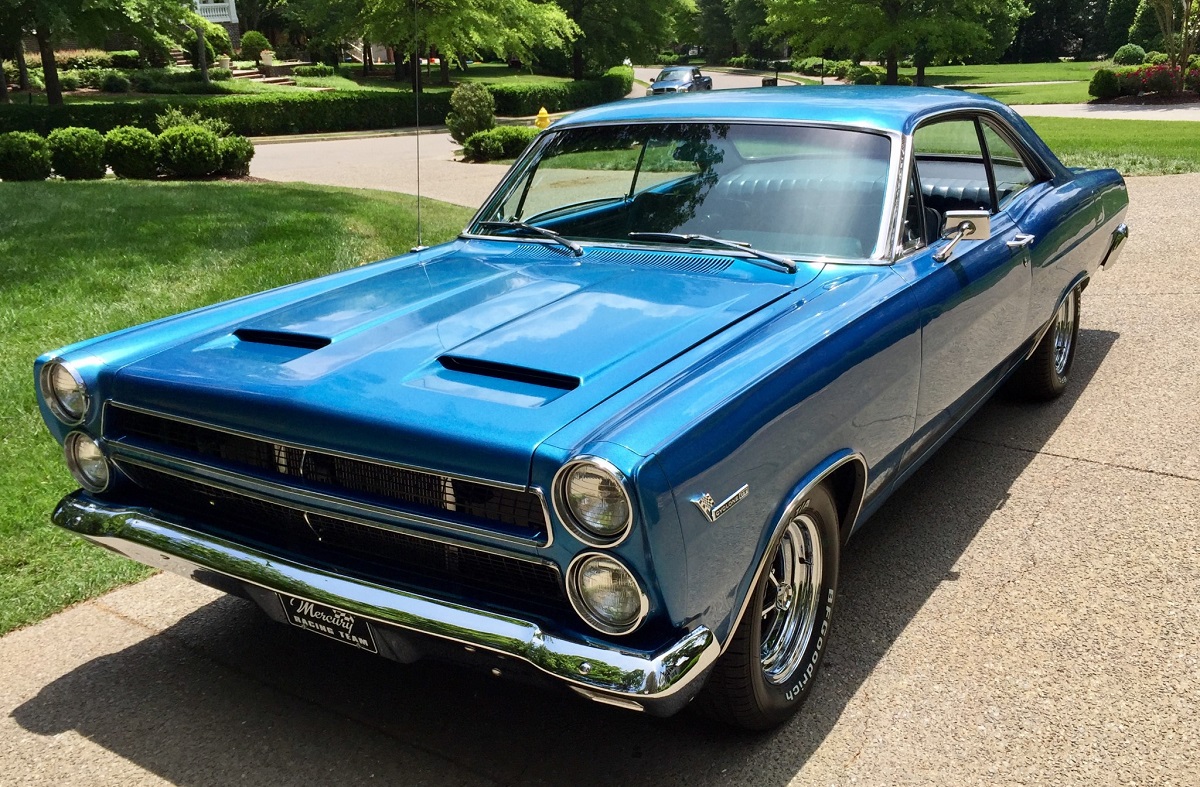
Mercury certainly had its share of memorable performers both on and off the street, including the unforgettable Trans-Am tested, high-powered Cougar.
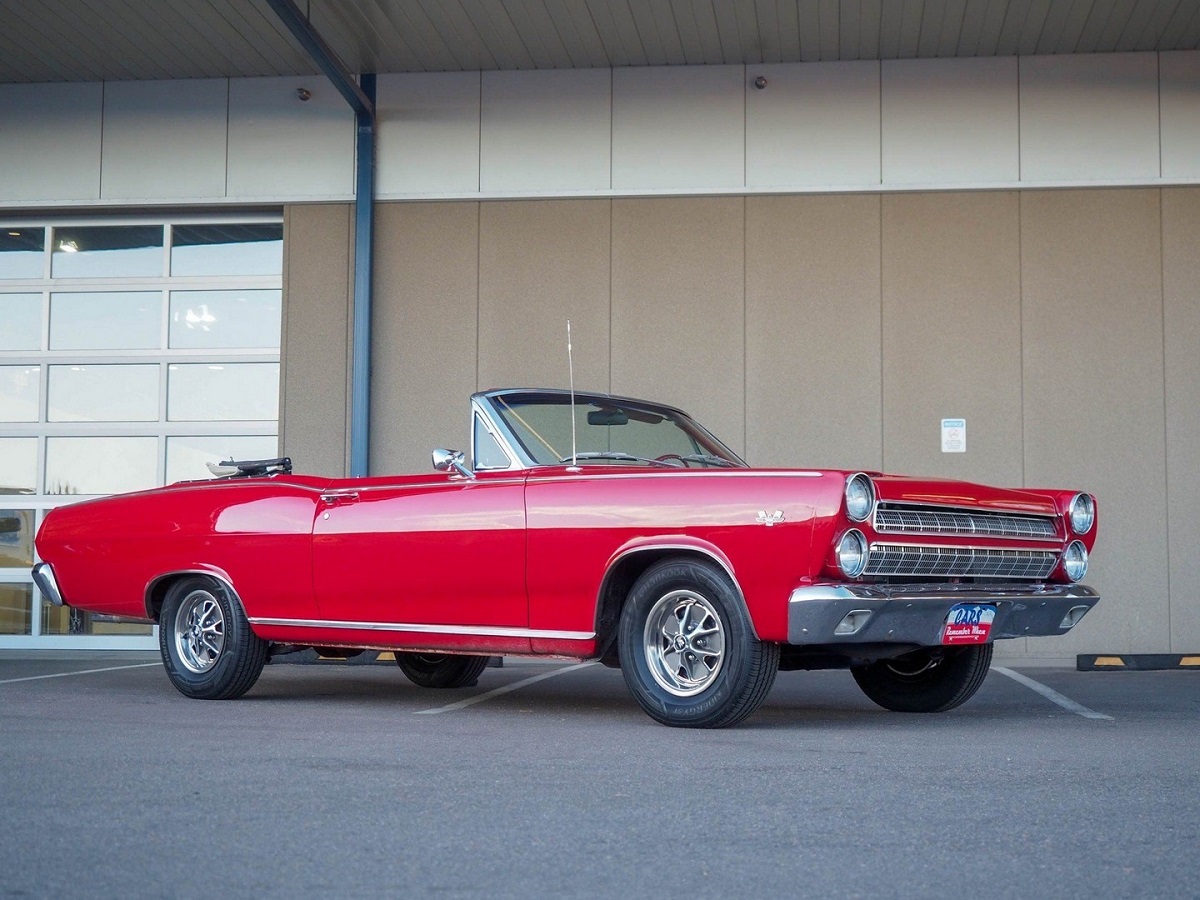
One other notable tire shredder was the 1966 Comet Cyclone GT.The Cyclone badge appeared on the 114-inch-wheelbase compact Comet line in 1964.
Available strictly as a two-door hardtop, the model mandated the installation of bucket seats and a 210hp, 289-cu.in. engine; it was also finished with a vinyl top, chrome rocker panel and wheel opening trim, as well as chromed wheels.
The following year, the model received its own grille styling and a fiberglass hood with twin air scoops.
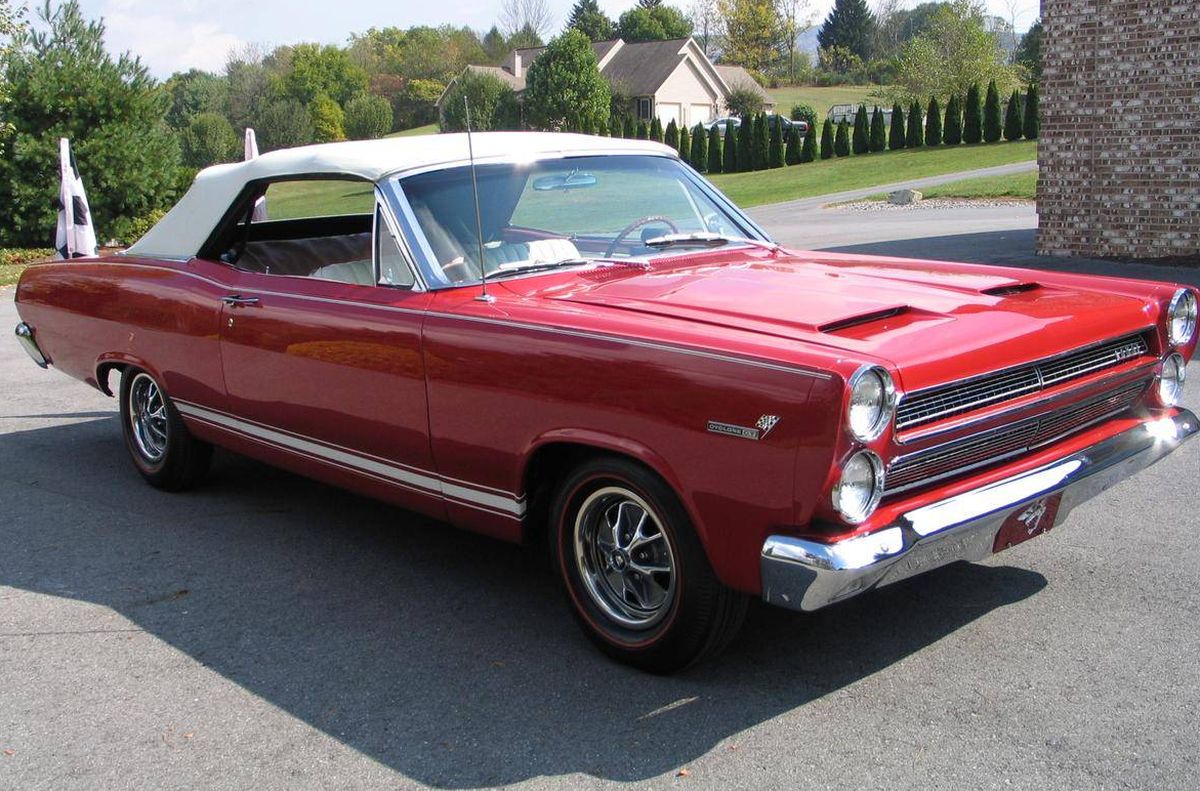
For 1966, the unit-body chassis was lengthened to 116 inches, placing the Cyclone squarely among other intermediates of the day.
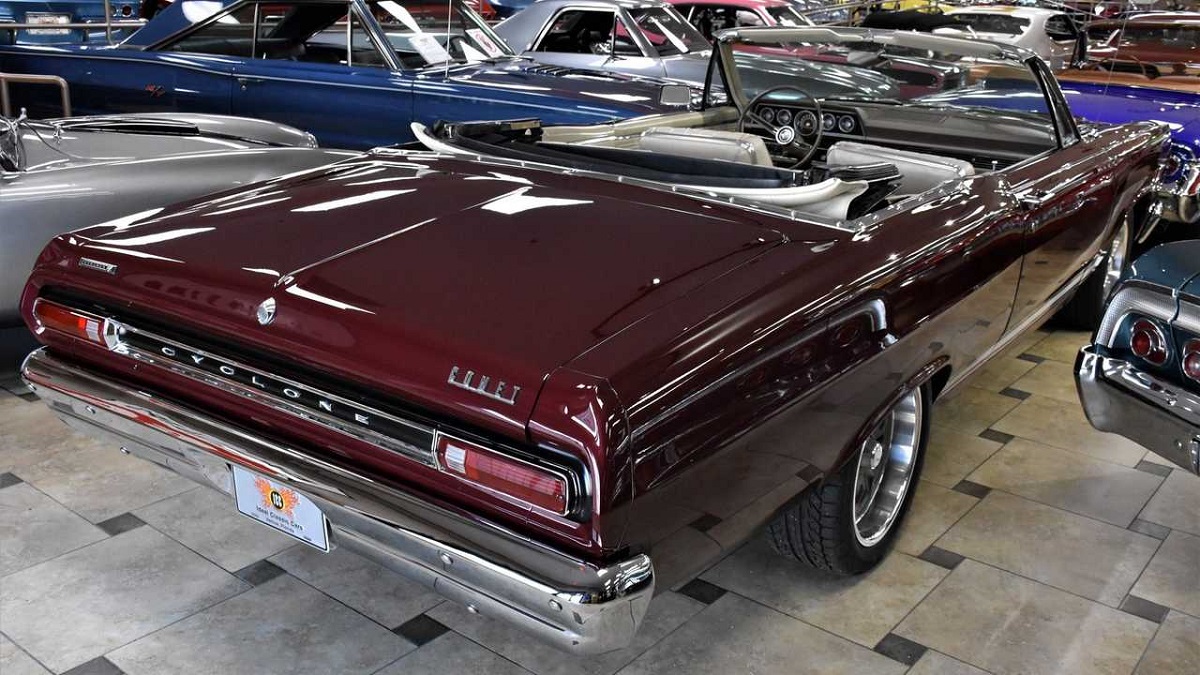
A sleek, aggressive body graced the lengthened chassis, including a smooth transition from the roof to the rear decklid.
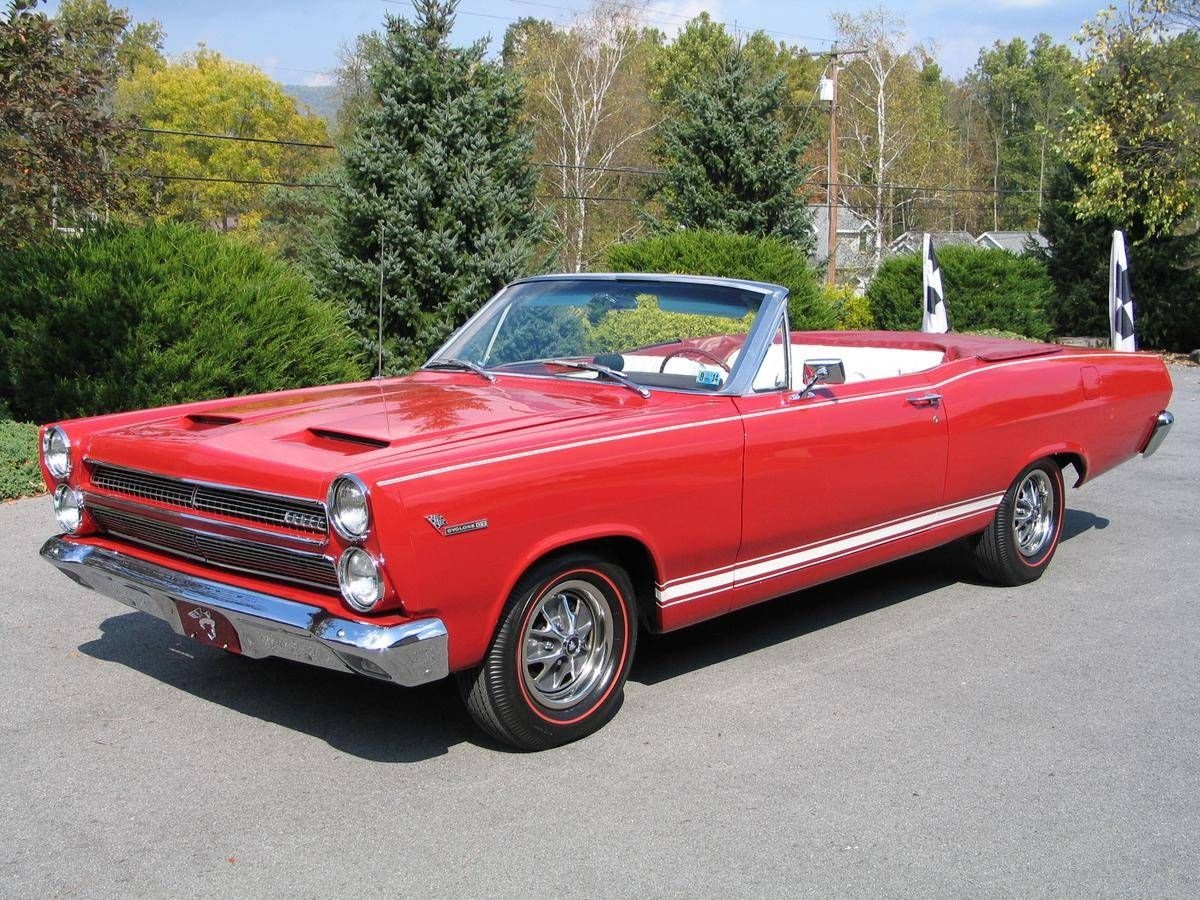
Furthermore, a convertible was added to the stable, as well as the new top performer of the group, the Cyclone GT.Standard Cyclone GT features included dual exhaust, and a four-barrel carbureted 390-cu.in. big-block engine rated for 335hp.
In addition, the suspension was beefed up and front disc brakes were installed.
Visually, the twin scooped hood was redesigned, a chrome engine dress-up kit was thrown in and horizontal body stripes were added just above the rockers; chrome wheels remained.
Although a three-speed manual transmission was still standard, it could have been swapped for a four-speed or an automatic.On paper, it had all the right stuff: power and visual appeal.
Mercury supplied a well-tuned four-speed GT to Car and Driver, whose editors promptly recorded a quarter-mile run of 13.98 at 103.8 MPH (April 1966). Still, it was popular in the showroom: 13,812 Cyclone GT hardtops were built, including the four-speed example featured here.
By way of comparison, Buick assembled just 9,934 GS hardtops, while Oldsmobile built 14,710 hardtop 4-4-2s.In the decades since, the ebb and flow of muscle car demand has meant that a percentage of intermediates have succumbed to the elements, parts pilfering and highway hazards. Yet somehow in this most recent upswing, the Cyclone GT has strangely taken a back seat to the competition with regard to demand, which in turn has a direct effect on value.As seen by the accompanying graph, a four-speed Cyclone GT in top condition has crept along to its current $15,000 ranking; most of the slow rise in the last decade can be attributed to inflation. Compare that to $31,000 for a four-speed GS in top condition, or a $44,000 four-speed 4-4-2. One explanation for such a discrepancy could be the demand for the Cobra Jet-powered fastback Cyclones of 1968-'69. Another could be that the FE 390s quickly became obsolete. If nothing else, the compelling truth here is that you can still obtain a big-block performance car for cheap money--at least for the time being.
Value Trend 1971 - $900 1981 - $2,000 1991 - $5,500 2001 - $12,500 2011 - $15,000








































































































































































































































































































 LINKS E SITES IMPORTANTES


