


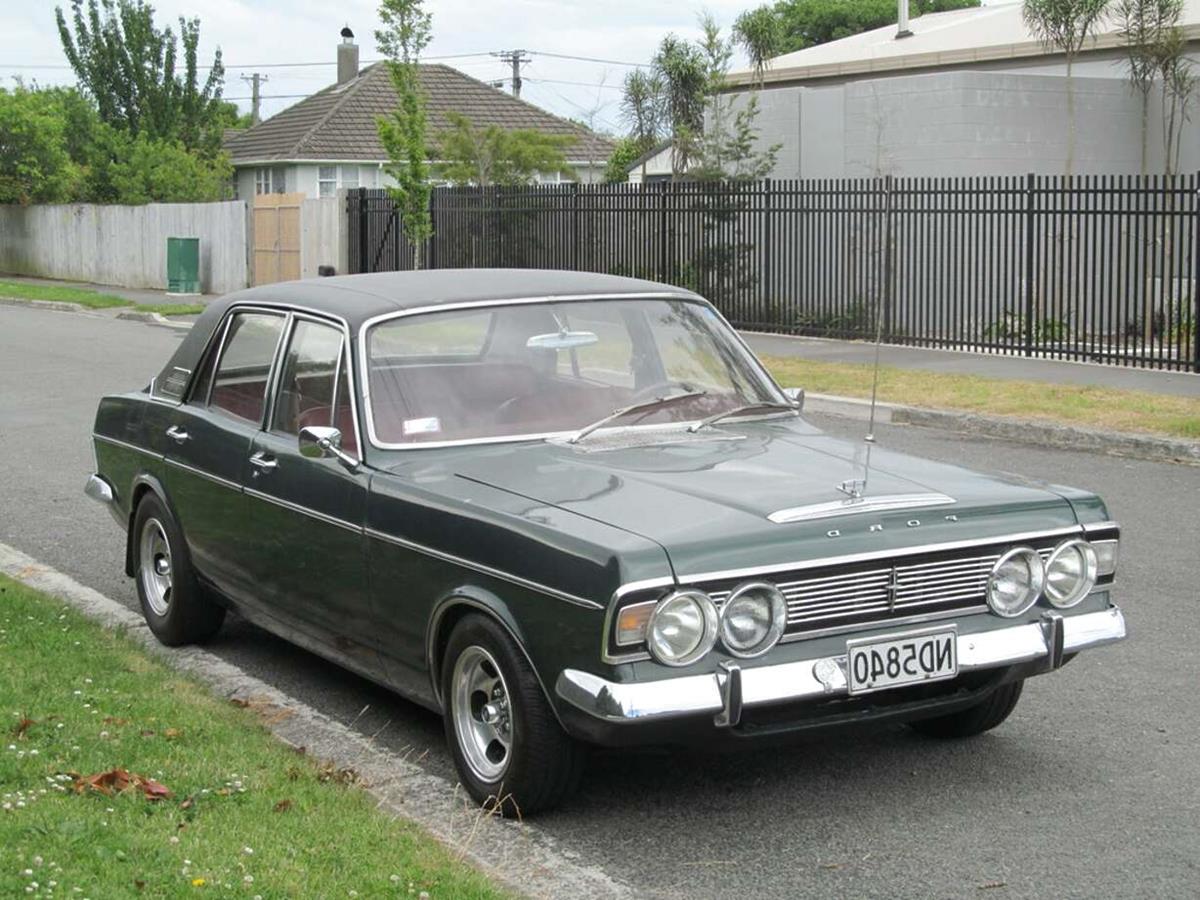
The Ford Zephyr is an executive car that was manufactured by Ford of Britain from 1950 to 1972. The Zephyr and its luxury variants, the Ford Zodiac and Ford Executive, were the largest passenger cars in the British Ford range from 1950 until their replacement by the Consul and Granada models in 1972.
Initially, the four-cylinder version was named Ford Consul, but from 1962, both four- and six-cylinder versions were named Zephyr.
Zephyr Mark IVIn 1961, Ford began a complete redesign on the Zephyr, under the title of "Project Panda". As the car used the new V-series engines, the then traditional long bonnet concept created a problem until design engineer Harley Copp required that the car was both larger and had more internal space, and came up with the idea of placing the spare wheel ahead of the radiator on an angle.
The result was a vehicle of similar dimensions to the North American Ford Fairlane.
The Mk IV range was launched, not at an October motor show, but in early 1966 with new V-format engines, the 4 having a 1,996 cc (122 cu in) V4 and the 2,495 cc (152 cu in) V6 unit. The independent suspension was aided by servo-assisted disc brakes on all wheels.
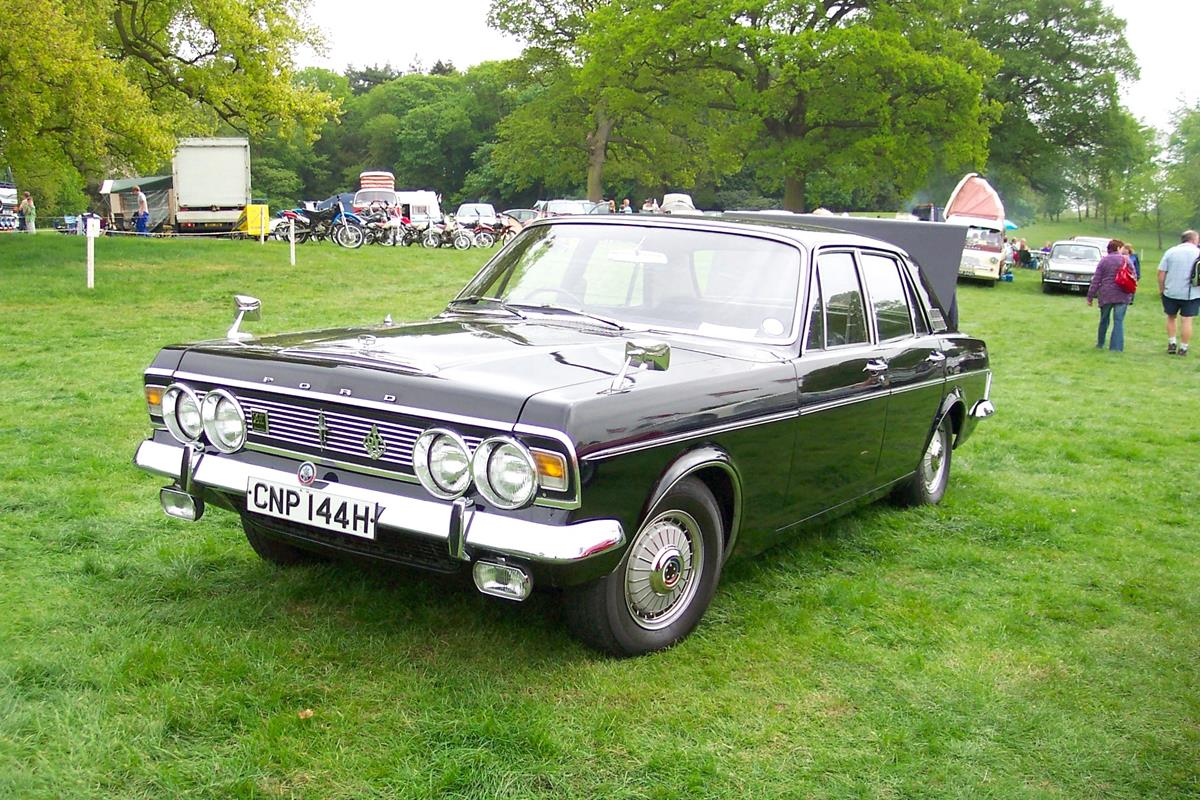
Criticism of the handling of early examples in the UK led to the fitting as standard of radial-ply tyres on the larger-engined version in place of the more conventional (in the UK at that time) cross-ply tyres with which all versions were shod at the 1966 launch, and the retrofitting of radial-ply tyres to early examples addressed the tendency of the rear wheels to slide uncontrollably in wet weather, justifying in the process Ford's investment in a new and relatively sophisticated rear suspension arrangement for the Mark IVs.[13] Even after that, a contemporary nevertheless opined that the ride involved a certain amount of 'float', and reported that the nose-heavy handling called for a 'strong driver', a problem which the more expensive Zodiac and Executive versions mitigated through the fitting as a standard feature of power assisted steering.
Cost constraints precluded adding power assisted steering for the Zephyr, but during its production run the steering ratio was lowered which reduced the strength needed to change direction by increasing the number of turns between locks from 5.5 to an even higher 6.4.
Another production modification for the 4-cylinder Zephyr involved redesigning the valve gear in order to eliminate the need on the early Mk IVs for frequent tappet adjustments.
The size of the bonnet was emphasized by square-cut styling of the wings. A practical use was found for some of the extra space in front of the driver; the spare wheel was stored, ahead of the engine, under the bonnet, freeing up space at the other end of the car for more luggage.
Although large, the car, at least in its Zephyr form, was not particularly luxurious. Individual front seats were available at extra cost, but the standard front bench seat was described by one commentator who ran the car on a long-term test as being intended for people no taller than 5 ft 8 in (1.72 m) who have the right leg 3 inches (8 cm) shorter than the left.
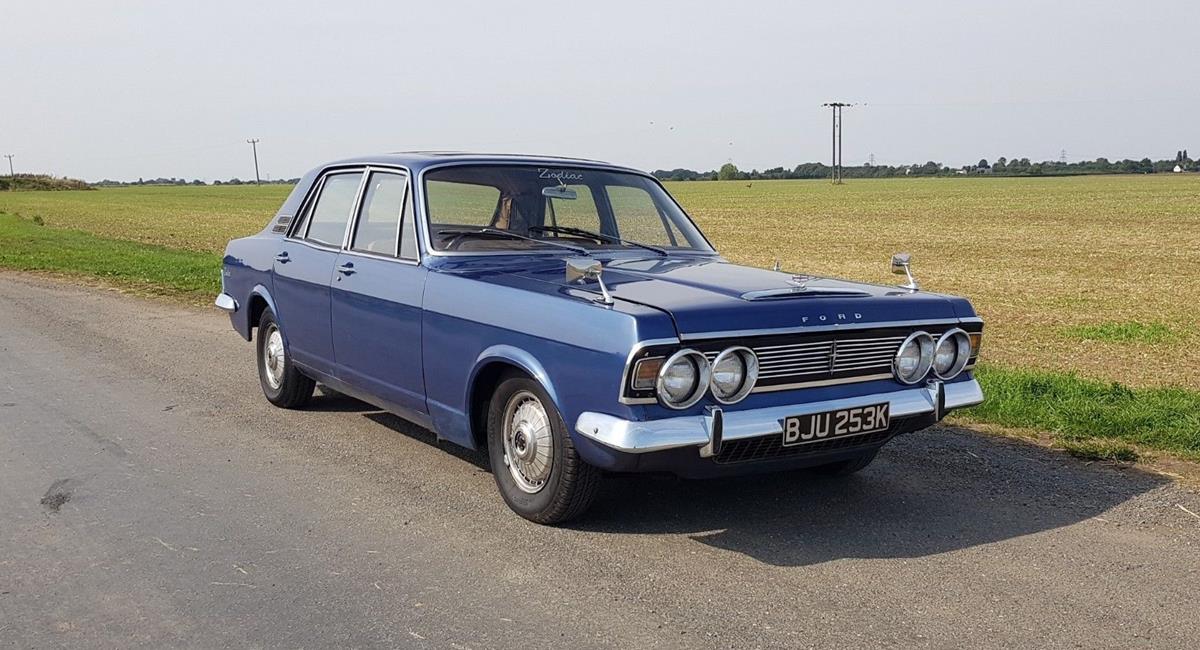
An estate version of the Zephyr Mark IV was announced just in time for the London Motor Show in October 1966, though deliveries commenced only in January 1967.
As with the earlier Zephyrs, volumes did not justify tooling up for estate production at the Dagenham plant, and the cars were instead built by E.D. Abbott Ltd of Farnham, based on part finished saloons received from Ford.
The Mark IV Zephyr estates (like their more expensive Zodiac siblings) came with black vinyl-covered roof, a fashionable distinguishing feature of upmarket vehicles at the time: retention unchanged of the saloon's rear light clusters attracted criticism, however, because of the way it narrowed the rear hatch opening at floor level when compared to the arrangements on the cheaper Ford Cortina estates.
Export models
In November 1966, the manufacturers announced a plan to introduce an "export special" version of the Zephyr Mk IV combining the 3.0-L engine of the Zodiac with other specifications largely following those of the existing Zephyr.
This 3.0-L Zephyr was not offered by Ford on the domestic (UK) market.
This 3.0-litre model was quickly adopted by Ford New Zealand, which had originally launched the Mk IV Zephyr assembled locally from CKD kits with the 2.5-litre V6 (no Zephyr 4 this time) and received complaints it was underpowered for a country where towing boats and caravans was common. Ford New Zealand also introduced optional floor gear shift and bucket seats as an alternative to the standard column shift and bench front seat, and a large number of Zephyrs were built in this form, with other modifications, for New Zealand's traffic police.
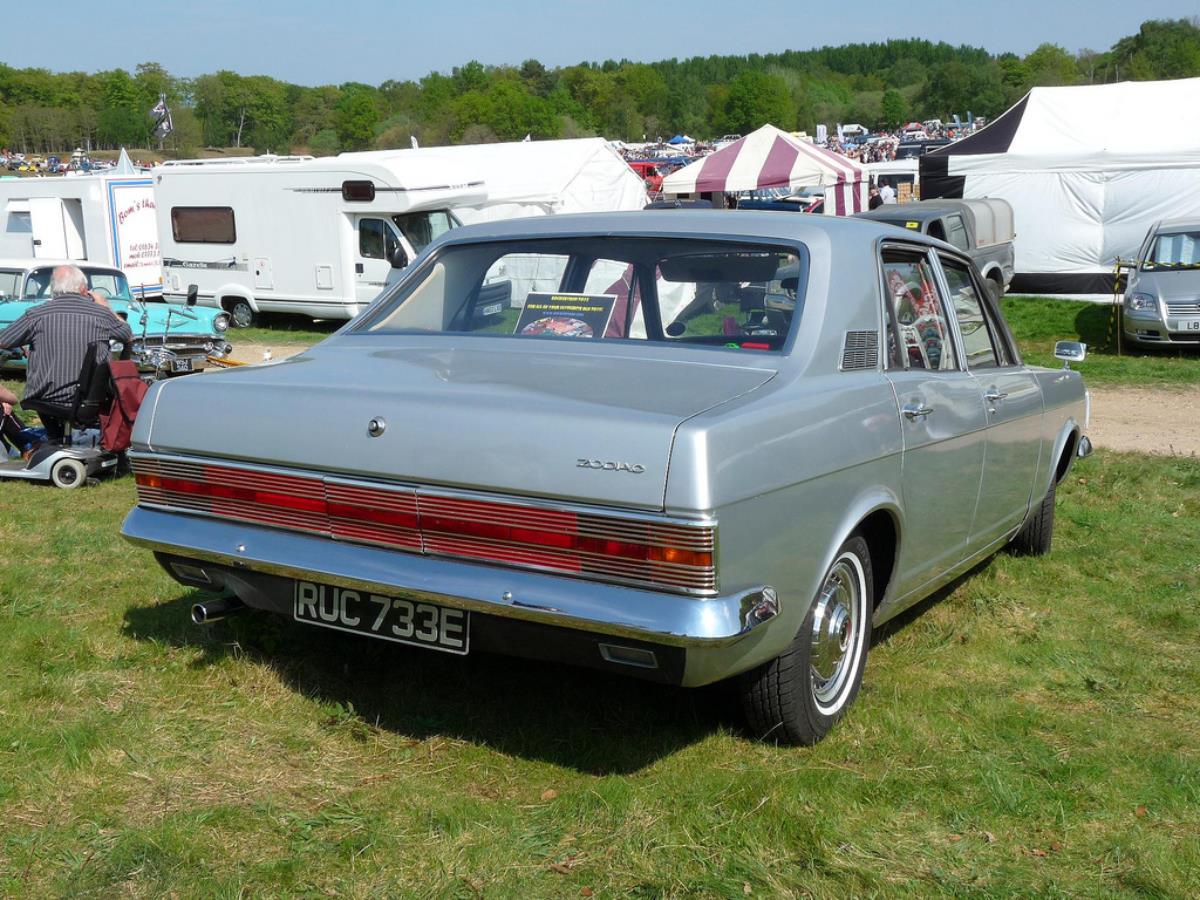
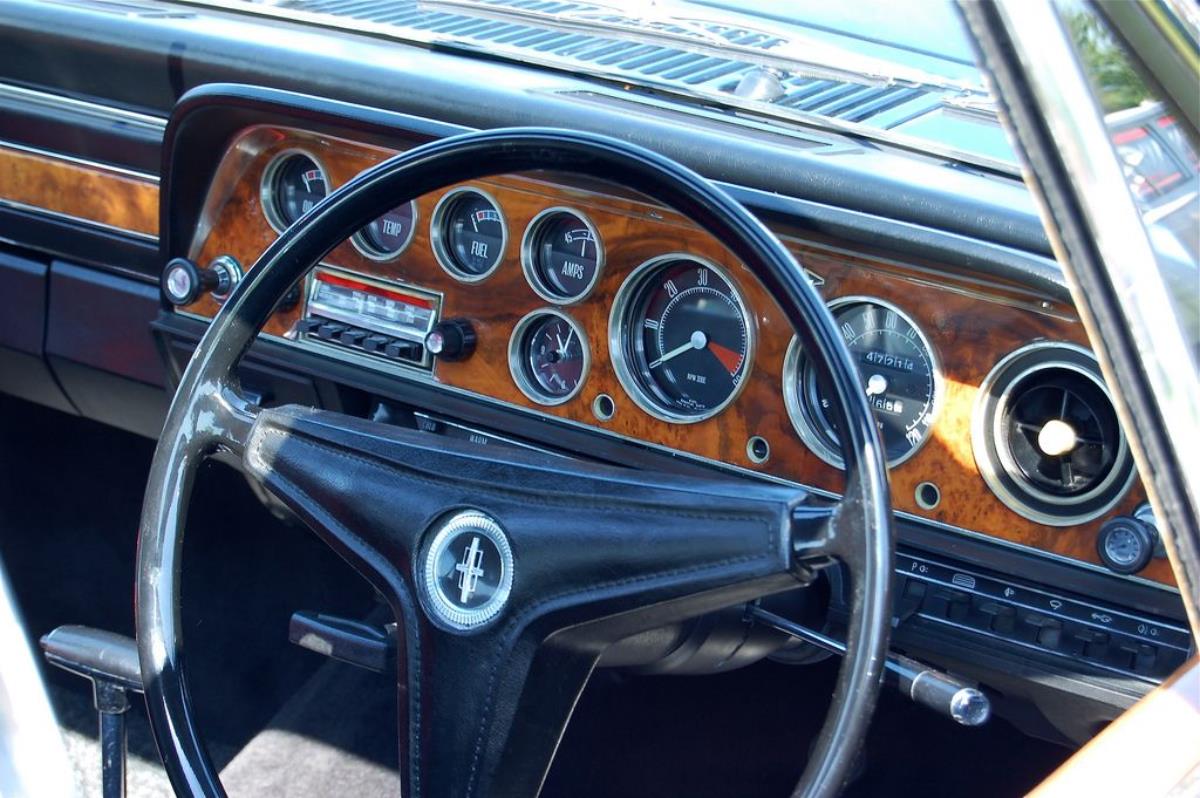
The Zodiac was also again assembled in New Zealand with both bench and bucket front seats and Zodiacs from about 1967 also had the walnut dashboard from the U.K. market Executive. An automatic transmission was optional with both the Zephyr and Zodiac. The local Mark IV line did not include the Zephyr Deluxe version available in the UK, was not as popular as the Mark III, and was outsold by the now much wider, locally built Australian Falcon range. Production ended in 1972, and the Consul and Granada replacements introduced in the UK were never officially imported into New Zealand.
South African Zephyrs and Zodiacs all received the 3.0-litre "Export" engine beginning with the 1968 model year. This also included replacing the earlier Zephyr Super with the new Zephyr de luxe, which received the dummy grille as on European cars.






































































































































































































































































 LINKS E SITES IMPORTANTES


