


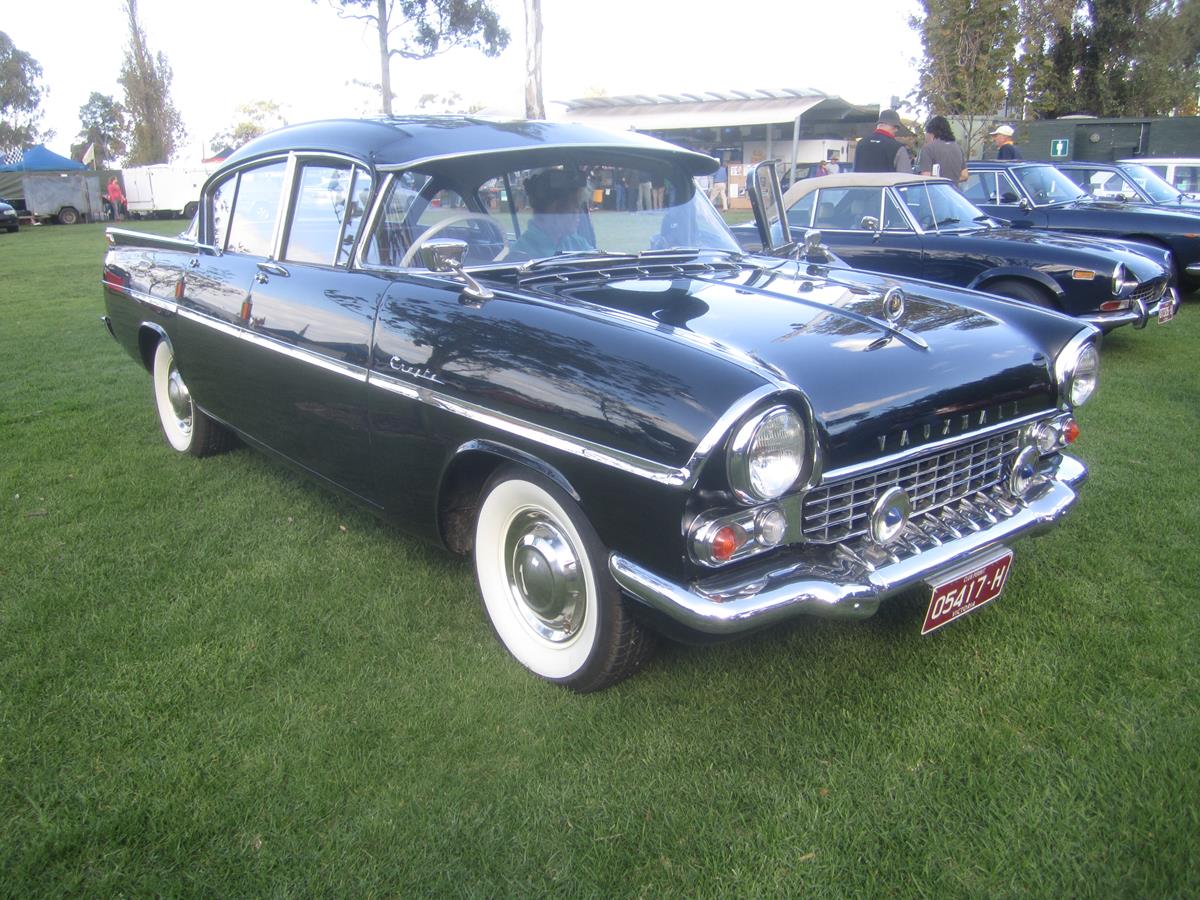
The Vauxhall Cresta is a British full-size car which was produced by Vauxhall from 1954 to 1972. The Cresta was introduced in 1954 as an upmarket version of the Vauxhall Velox, itself a six-cylinder version of the Vauxhall Wyvern.
The Cresta models were the E (1954–1957), PA (1957–1962), PB (1962–1965) and PC (1965–1972). The Viscount (1966–1972) was an upmarket Cresta PC.
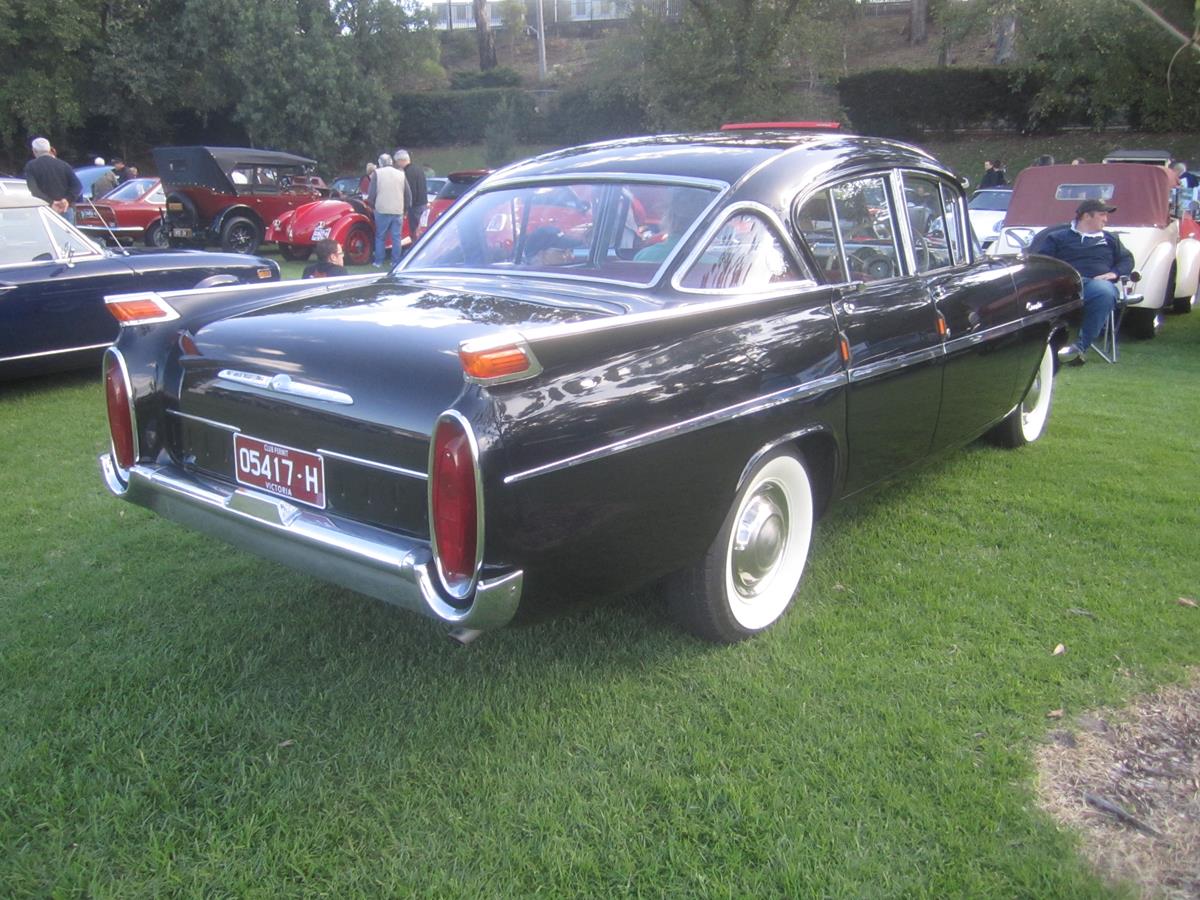
Cresta PA
The PA Cresta was announced on 2 October 1957.
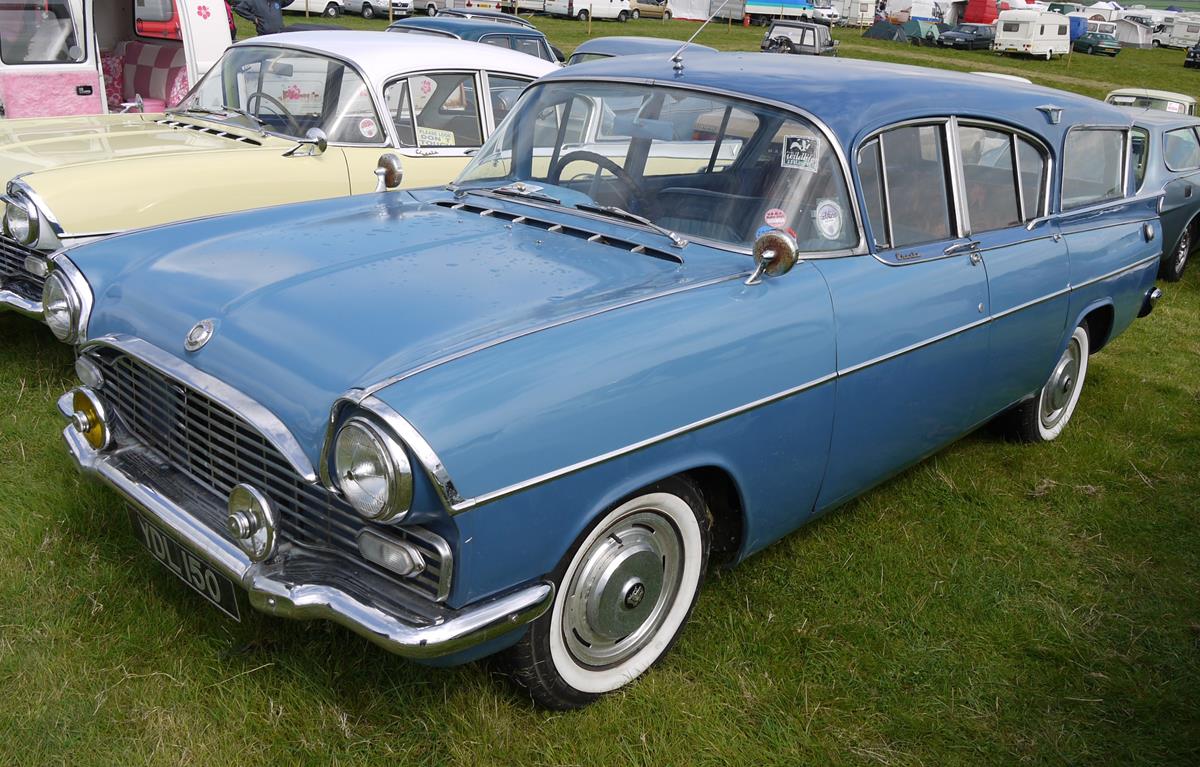
It mimicked the American fashion for tail-fins, wrap-around windows and white-wall tyres, taking its cues from the 1957 model Buick Special announced twelve months before the Cresta, though understated compared to the Cadillacs and Buicks of the time. All factory-built PAs were four-door saloons: the estate cars were converted by Friary of Basingstoke, Hampshire and are rare today.
The PA Cresta had independent front suspension using coil springs and an anti-roll bar with a rigid axle and semi-elliptic leaf springs at the rear. The Lockheed brakes used 9 in (230 mm) drums all round. Carried over from the last of the E series cars, the 2,262 cc six-cylinder engine had pushrod-operated overhead valves and a compression ratio of 7.8:1 (a low compression 6.8:1 version was available); it produced 82.5 bhp (61.5 kW) at 4,400 rpm. A single Zenith carburettor was used. The transmission had three forward speeds.
It was well equipped with leather and nylon upholstery for its bench front and rear seats and woven pile carpet. A heater was fitted as standard. The radio remained an option on the home market. Other options included fog lamps, reversing light, locking filler cap and external mirrors. In order to keep the front floor clear to seat six people the handbrake lever was mounted under the dashboard and the gearchange lever was column mounted. The car could be ordered painted in either single or two tone colours.
A PA tested by the British magazine The Motor in 1958 had a top speed of 89.8 mph (144.5 km/h) and could accelerate from 0-60 mph (97 km/h) in 16.8 seconds. A petrol consumption of 25.2 miles per imperial gallon (11.2 L/100 km; 21.0 mpg‑US) was recorded. The test car cost £1073 including taxes of £358.[6] They tested the 2.6 Litre version with overdrive in 1960 and found the top speed had increased to 94.7 mph (152.4 km/h), acceleration from 0-60 mph (97 km/h) to 15.2 seconds and fuel consumption improved to 26.8 miles per imperial gallon (10.5 L/100 km; 22.3 mpg‑US). The test car cost £1077 including taxes of £317. The car without overdrive cost £1014
Australian assembly of the PA Cresta began in May 1958 by General Motors Holden. Subsequent models were assembled up until 1965.
In August 1959 the Cresta was given a facelift, with a new, larger, grille and the replacement of the three piece rear window with a single wrap around screen. The previous ribbed roof panel was replaced with a smoothly contoured version (with structural revisions to the C pillars and rear parcel shelf area to retain structural strength). The Vauxhall flutes on the front wings finally disappeared, replaced by a straight chrome side moulding which was also the division point for the two tone colour scheme. Further changes came in August 1960 with the introduction of a new engine of square dimensions (bore and stroke were both 82.55mm) with a redesigned, longer, cylinder block and a capacity of 2651cc. A further increase in compression ratio to 8.0:1 and larger valves in wedge shaped combustion chambers contributed to a power output of 95bhp at 4,600rpm. Increased diameter wheels allowed larger brakes to be fitted, but these were still of the drum type (Ford had introduced front disc brakes as an option on the rival Zephyr/Zodiac models in September 1960 and would make them standard in June 1961).
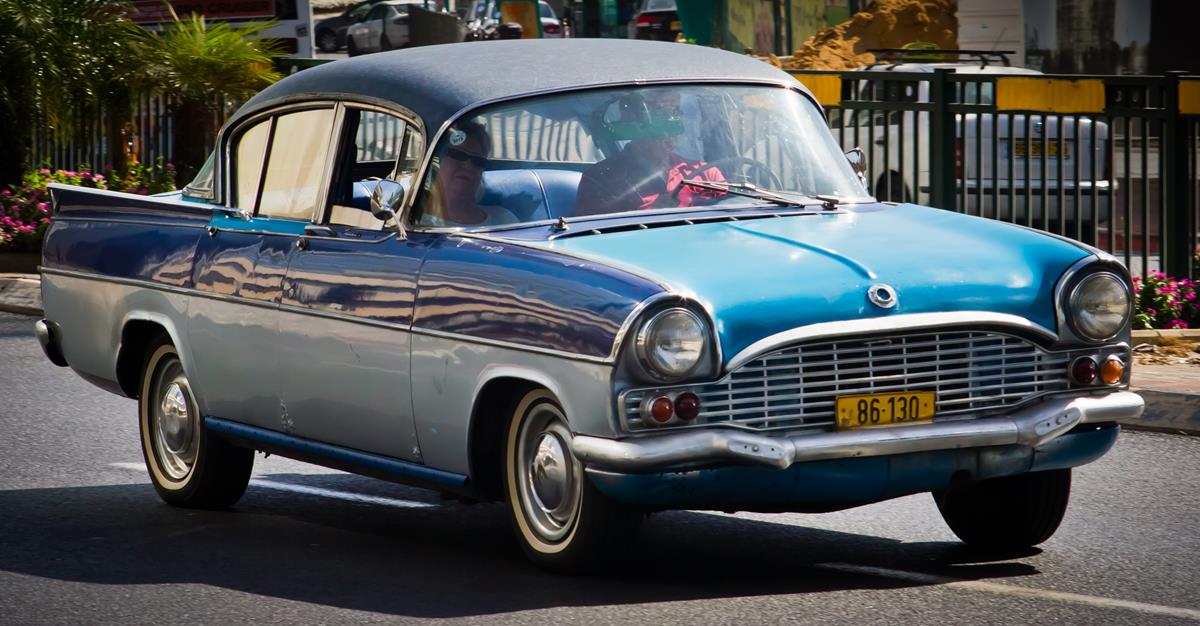
Externally, there was a redesign of the rear lights, with shallower units replacing the elongated oval ones of the previous versions. The direction indicators, previously in the rear tail fins were now incorporated in the main lamp unit and the fins were now solid with a V for Vauxhall badge. The rear bumper was now a higher mounted straight topped design. The front sidelights and direction indicators, previously separate were now in a combined housing and there were redesigned wheel trims and hub caps. Inside, a redesigned fascia with a padded top and a horizontal speedometer was featured. In October 1961 the final updates to the PA series were made. Front disc brakes became an optional extra (four months after Ford had made them standard on the Zephyr/Zodiac). Separate front seats became an option to the standard bench and there was now wood trim to the fascia and door cappings. The PA Cresta continued in production in this form until replaced by the PB series in October 1962.
During the 1970s many PA Crestas were modified and customised. The model was very popular with fifties revivalists; many were driven by teddy boys and were very much seen as part of the rock 'n' roll image. A 1960 PA Cresta features in the 1981 video for "Ghost Town" by The Specials, in which the band are wearing '50s-style clothing.The Specials Ghost Town Car can now be seen in the Coventry Music Museum.
Today the PA Cresta is a recognised classic, with the other variants perhaps less appreciated but gaining recognition. One famous PA owner in the late 1950s was Don Lang.




























































































































































































































 LINKS E SITES IMPORTANTES


